
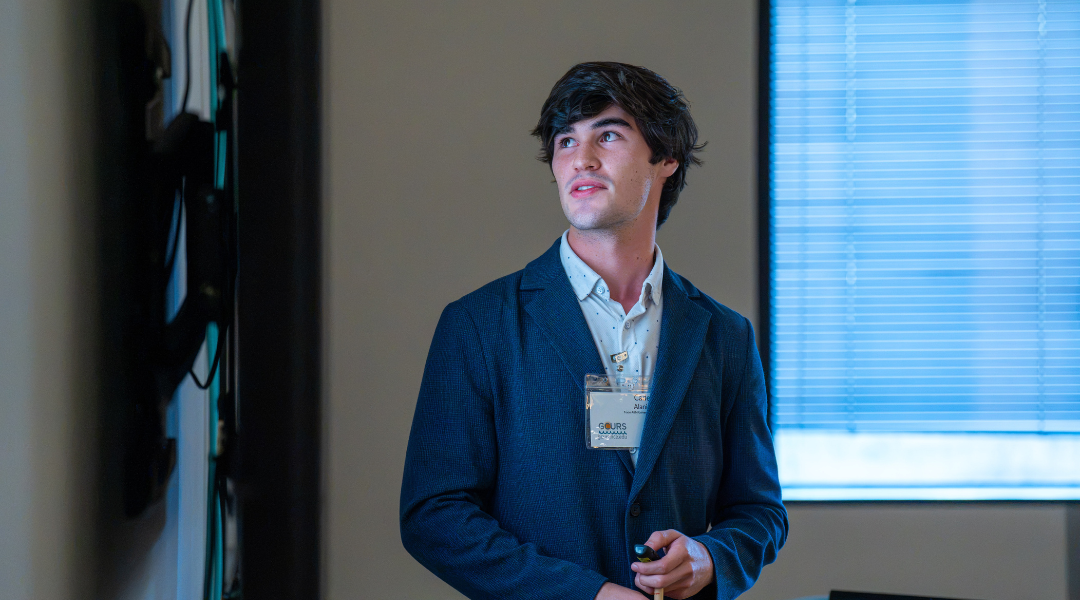
Gabriella Lechasseur-Aguilar’s path to Rice University began with a community college certificate program, an unexpected interest in chemistry and an email to a researcher whose work caught her attention.
Originally from San Antonio, Lechasseur-Aguilar found her way to the University of Toledo and an inorganic chemistry research lab. While exploring work related to the molecules she was studying, she discovered Rice chemist Raúl Hernández Sánchez.
She decided to reach out, and that conversation, which began nearly two years ago, eventually led to an invitation to apply to the Gulf Coast Undergraduate Research Symposium. This October, she arrived at Rice to present her work and meet the people behind the research she had been following from afar.
“I’m a developing scientist, and I have lots to learn,” Lechasseur-Aguilar said.
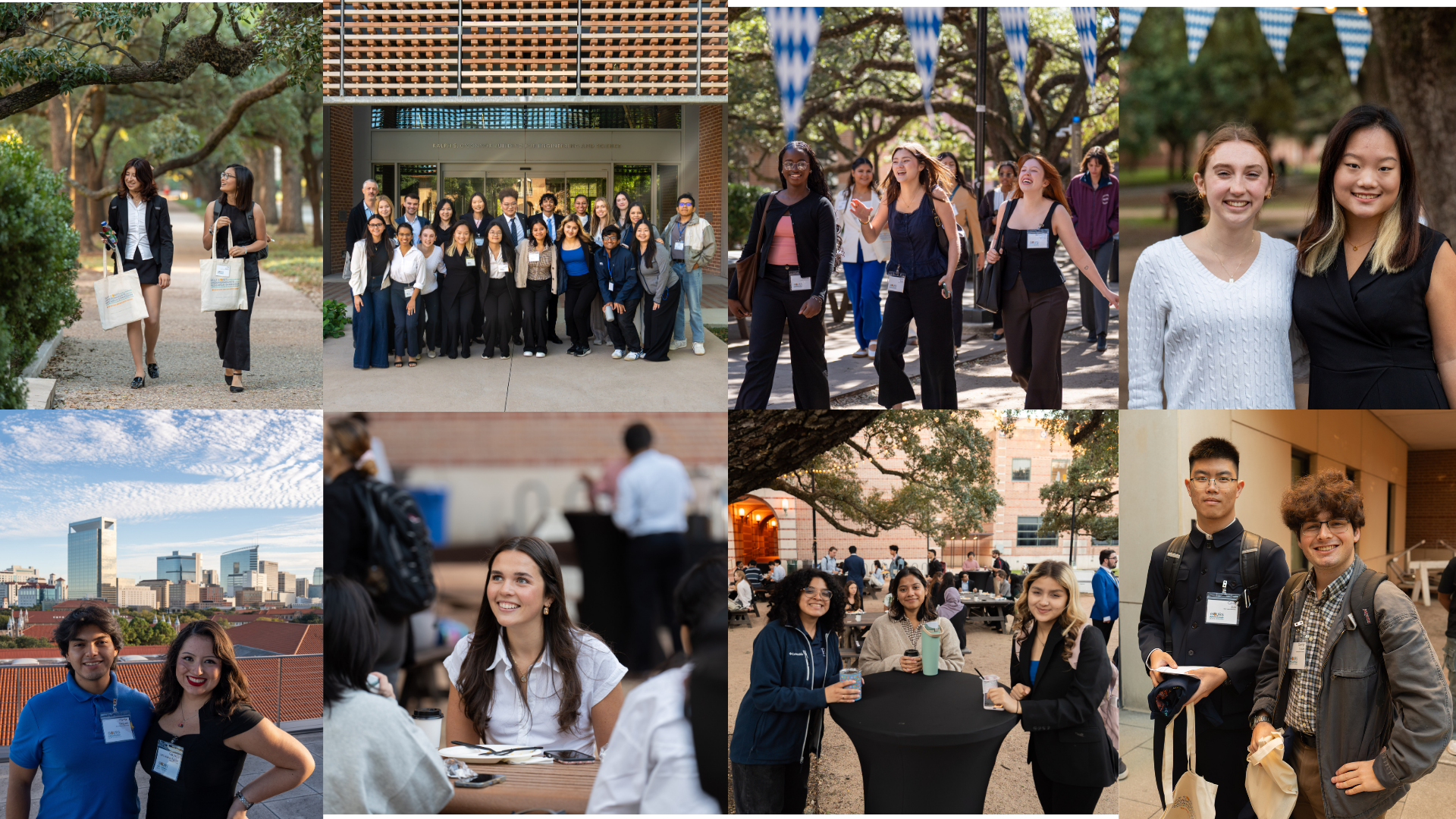
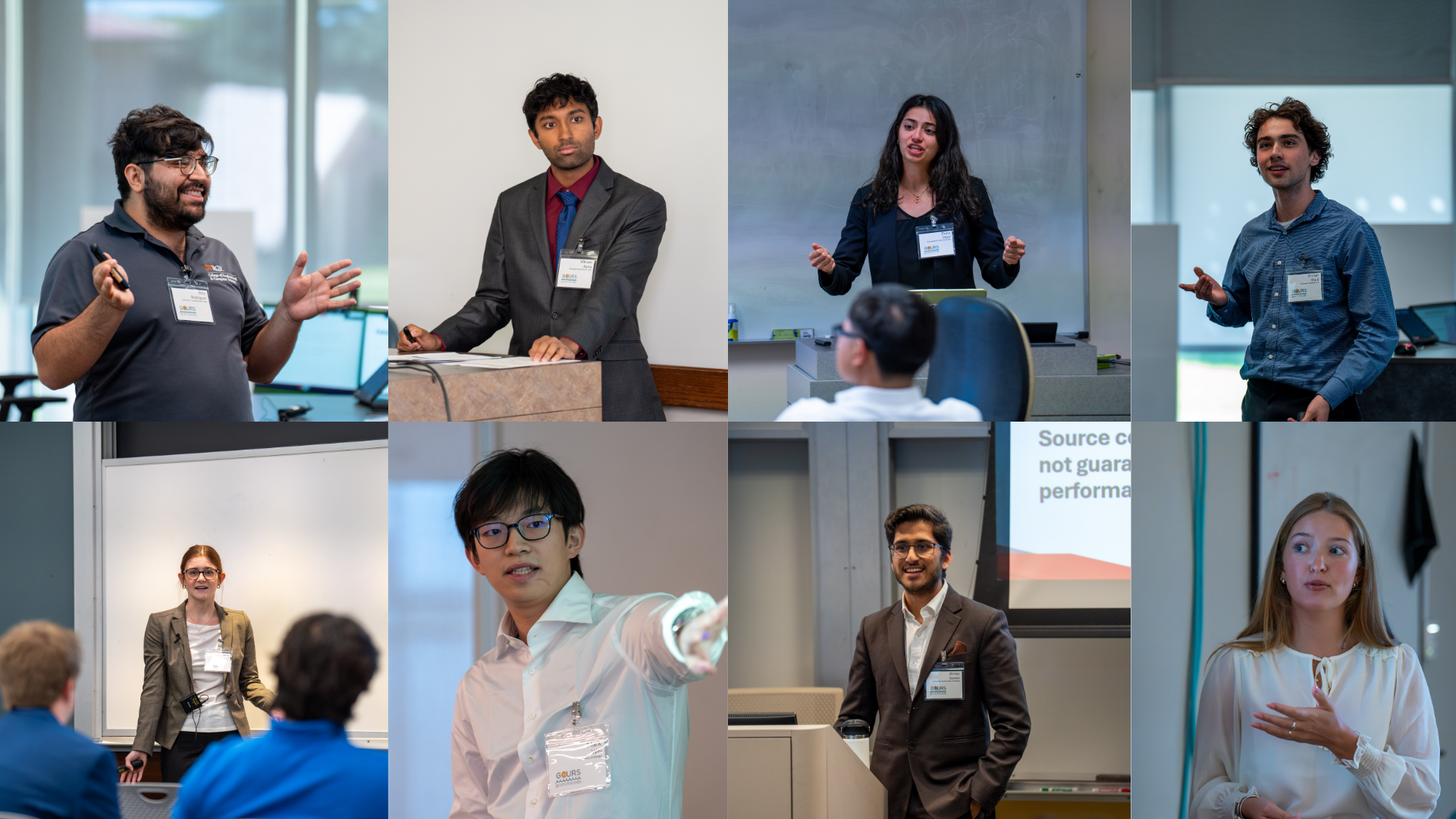
She was among more than 300 undergraduate researchers from across the United States and around the world who came to Rice for GCURS 2026. The symposium gave participants opportunities to deliver research talks, receive feedback from faculty and graduate students, and explore possibilities for graduate study.
For Lechasseur-Aguilar, whose interests include green chemistry, the experience also meant meeting students who shared her enthusiasm for science.
“I love getting to just walk up to anybody and say, ‘Who are you? What’s your story? How did you come to love science?’” she said.
Those conversations are central to the experience, said Cam Zapater, program administrator in the Office of Graduate and Postdoctoral Studies, who organized the event.
“An academic career can be shaped by a conversation you weren’t expecting to have,” Zapater said. “GCURS gives students room for those happy accidents — meeting someone whose research sparks an idea or making a connection that opens a new opportunity. We want them to recognize that networking can be a chance to follow their curiosity and discover how much of an adventure academia can be.”
Among the presenters were more than 100 Goldwater Scholars, including Vikram Karra, a senior studying neuroscience at Washington University in St. Louis.
“Hopefully, the data that I can create right now can have actual, real, profound clinical implications in the future,” Karra said.
The opportunity to gather with fellow scholars helped draw him to GCURS, where he presented research on microglia, immune cells in the brain, and their role in diseases such as Alzheimer’s.
For Goldwater Scholar Cade Alaniz, a Texas A&M University student, battery research is connected to the consequences of power failures. Reflecting on the 2021 Texas winter storms, he said he wanted to improve energy storage and support renewable energy.
“By pursuing battery science, I really want to expand the capacity that we have,” Alaniz said, “not only on the grid, but just push for renewable sources and help not only Texas but the global community, and make sure energy is a right and not a privilege.”
GCURS emphasizes oral presentations and mentoring, giving students practice in explaining their research to audiences beyond their own laboratories. Faculty and graduate students offer feedback on both the work and its communication.
Seiichi Matsuda, dean of Graduate and Postdoctoral Studies, encouraged presenters to explain why their research matters, welcome questions and make time to introduce themselves.
“You can’t have every answer, but these conversations can help you think about your research in a new way,” Matsuda said.
For Emily Crespin Guerra, a materials science and engineering student at the Massachusetts Institute of Technology from El Salvador, the symposium offered a chance to share her work outside her familiar surroundings.
Her research adviser, who completed graduate studies at Rice, encouraged her to apply after a summer working in the lab.
“This is my first time going out of my usual MIT bubble and presenting what I’ve been doing these past months to a larger audience,” Crespin Guerra said.
Other participants used the visit to consider how their undergraduate interests might develop in graduate school.
Grace Michael, a computer engineering major at Michigan State University, came to present her summer research conducted at Duke University and learn more about Rice. Interested in brain-computer interfaces, she sees a doctorate as a way to develop the knowledge and expertise to pursue that work.
“I really want to do this,” Michael said. “100%.”
For Durga Meenakshi Panneerdoss, a student at the University of Texas at San Antonio applying to M.D./Ph.D. programs, the appeal included presenting research in a setting designed to foster constructive feedback.
The connections began before the presentations did. At breakfast, she asked to join a group of students she had never met.
“We hit it off immediately,” Panneerdoss said. “Everyone was super welcoming, and everyone was curious about my research, but then also life outside of research.”
For Lechasseur-Aguilar, the weekend was another step along a path she could not have predicted when she began community college. She hopes graduate school will bring her back to Rice. For now, GCURS offered a place to share her work, learn from other researchers and consider how chemistry could help her make a difference.
“Whatever you can do to help the world get to a better place,” she said, “I think the investment is very important for that.”
Explore the GCURS 2026 photo gallery featuring student presentations, mentoring conversations and moments from across Rice’s campus.